

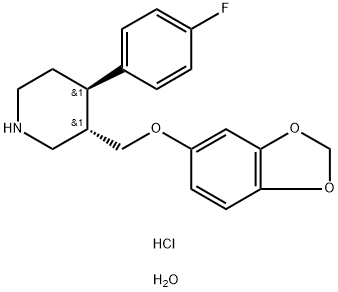
| 中文名称 | 盐酸帕罗西汀 |
| 英文名称 | PAROXETINE-D4 HCL |
| CAS号 | 110429-35-1 |
| 分子式 | C19H23ClFNO4 |
| 分子量 | 383.84 |
| EINECS号 | 000-000-0 |
| 熔点 | 121-131 C |
| 溶解度 | 微溶于水,易溶于甲醇,微溶于乙醇(96%)和二氯甲烷。 |
| 形态 | 粉末 |
| 颜色 | 白色 |
| 最大波长(λmax) | 292nm(H2O)(lit.) |
| 默克索引编号 | 14,7043 |
| 危险品标志 | F,C,Xn |
| 危险类别码 | 11-34-36/37/38-22 |
| 安全说明 | 16-26-36/37/39-45-36 |
| 危险品运输编号 | UN 3077 9 / PGIII |
| WGK Germany | 3 |
| RTECS号 | TM4569320 |
| 海关编码 | 29349990 |
| 危险等级 | IRRITANT |
IC50: 14 μM (GRK2)
Paroxetine (1 μM and 10 μM) distinctly restrains T cell migration induced by CX3CL1 through inhibiting GRK2. Paroxetine inhibits GRK2 induced activation of ERK. Paroxetine (10 μM) reduces pro-inflammatory cytokines in LPS-stimulated BV2 cells. Paroxetine (0-5 μM) leads to a dose-dependent inhibition on LPS-induced production of TNF-α and IL-1β in BV2 cells. Paroxetine also inhibits lipopolysaccharide (LPS)-induced nitric oxide (NO) production and inducible nitric oxide synthase (iNOS) expression in BV2 cells. Paroxetine (5 μM) blocks LPS-induced JNK activation and attenuates baseline ERK1/2 activity in BV2 cells. Paroxetine relieves microglia-mediated neurotoxicity, and suppresses LPS-stimulated pro-inflammatory cytokines and NO in primary microglial cells.
Paroxetine treatment obviously attenuates the symptoms of CIA rats. Paroxetine treatment clearly prevents the histological damage of joints and alleviates T cells infiltration into synovial tissue. Paroxetine reveals a strong effect on inhibiting CX3CL1 production in synovial tissues. Paroxetine (20 mg/kg/day) reduces the myocyte cross-sectional area in rat and ROS formation in the remote myocardium. Paroxetine reduces the susceptibility to ventricular tachycardia. Paroxetine treatment following MI decreases LV remodeling and susceptibility to arrhythmias, probably by reducing ROS formation. In CCI paroxetine-treated group, paroxetine (10 mg/kg, i.p.) produces hyperalgesia at days 7 and 10 (P<0.01), but a decrease in pain behavior is seen at day 14. Moreover, paroxetine (10 mg/kg) significantly attenuates tactile hypersensitivity when compared to CCI vehicle-treated group.
-
CAS号:125224-43-3
(3S,4R)-(-)-4-(4\'-氟苯基)3-羟甲基)-哌啶 -
CAS号:110429-35-1
盐酸帕罗西汀半水合物 -
CAS号:201855-60-9
trans 1-Benzyl-4-(4-fluorophenyl)-3-piperidinemethanol -
CAS号:61869-08-7
帕罗西汀 -
CAS号:1346597-97-4
(3s,4r)-3-((苯并[d][1,3]二氧代-5-基氧基)甲基)-4-(4-乙氧基苯基)哌啶盐酸盐 -
CAS号:105813-39-6
Defluoro N-Benzyl Paroxetine Hydrochloride -
CAS号:37656-48-7
4-(4-氟苯基)哌啶 -
CAS号:105813-14-7
trans N-Benzyl Paroxetine -
CAS号:129938-20-1
盐酸达泊西汀 , 一种短效的选择性5-羟色胺重吸收抑制剂 -
CAS号:78246-49-8
盐酸帕罗西汀 -
CAS号:125224-43-3
(3S,4R)-(-)-4-(4\'-氟苯基)3-羟甲基)-哌啶 -
CAS号:110429-35-1
盐酸帕罗西汀半水合物 -
CAS号:201855-60-9
trans 1-Benzyl-4-(4-fluorophenyl)-3-piperidinemethanol -
CAS号:61869-08-7
帕罗西汀 -
CAS号:1346597-97-4
(3s,4r)-3-((苯并[d][1,3]二氧代-5-基氧基)甲基)-4-(4-乙氧基苯基)哌啶盐酸盐 -
CAS号:105813-39-6
Defluoro N-Benzyl Paroxetine Hydrochloride -
CAS号:37656-48-7
4-(4-氟苯基)哌啶 -
CAS号:105813-14-7
trans N-Benzyl Paroxetine -
CAS号:129938-20-1
盐酸达泊西汀 , 一种短效的选择性5-羟色胺重吸收抑制剂 -
CAS号:78246-49-8
盐酸帕罗西汀