

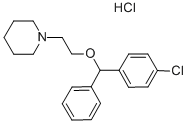
| 中文名称 | 盐酸氯哌斯丁 |
| 英文名称 | Cloperastine hydrochloride |
| CAS号 | 14984-68-0 |
| 分子式 | C20H25Cl2NO |
| 分子量 | 366.32 |
| EINECS号 | 239-067-8 |
| 熔点 | 147.9° |
| 溶解度 | 可溶于DMSO(少许)、甲醇(少许) |
| 形态 | 固体 |
| 颜色 | 白色至类白色 |
| 默克索引编号 | 14,2395 |
| 危险品标志 | Xn |
| 危险类别码 | 22 |
| 安全说明 | 36 |
| WGK Germany | 3 |
| RTECS号 | TM6491500 |
| 海关编码 | 2933.39.9200 |
27 nM (K + currents)
Cloperastine inhibits the hERG K
+
currents in a concentrationdependent manner with an IC
50
value of 27 nM.
Among the antitussive agents, Cloperastine, which possesses antitussive and antiedemic activity, also relaxes the bronchial musculature. Cloperastine is a drug with a central antitussive effect, and is also endowed with an antihistaminic and papaverine-like activity similar to codeine but without its narcotic effects.
In the anesthetized guinea pigs, Cloperastine at a therapeutic dose of 1 mg/kg prolonged the QT interval and monophasic
action potential (MAP) duration without affecting PR interval or QRS width.
Cloperastine hydrochloride shows relatively low acute toxicity when administered by the intraperitoneal route in rats and mice, and shows minor toxicity by the oral route when administered as Cloperastine fendizoate, the LD
50
in rats and mice for the two administration routes exceeds 1000 and 2000 mg/kg, respectively.
-
CAS号:95266-40-3
抗倒酯(标准品) , 100 μg/mL in Methanol -
CAS号:64-17-5
乙醇 -
CAS号:3703-76-2
氯哌斯汀 -
CAS号:119413-54-6
盐酸拓扑替康 -
CAS号:109-94-4
甲酸乙酯 -
CAS号:100-41-4
乙基苯 , 超干溶剂, water≤20 ppm, J&KSeal瓶 -
CAS号:120-47-8
尼泊金乙酯 -
CAS号:119-56-2
4-氯二苯甲醇 -
CAS号:58-73-1
苯海拉明 -
CAS号:120011-70-3
盐酸多奈哌齐 , 是非竞争性的AChE抑制剂, 能穿过血脑屏障, 增加皮质中的乙酰胆碱水平 -
CAS号:163520-33-0
双苯恶唑酸 -
CAS号:110-80-5
乙二醇乙醚 -
CAS号:141-78-6
乙酸乙酯 , 99.9% , 超干溶剂, 带分子筛, J&KSeal瓶 -
CAS号:147-24-0
盐酸苯海拉明 -
CAS号:34552-83-5
盐酸洛哌丁胺 -
CAS号:95266-40-3
抗倒酯(标准品) , 100 μg/mL in Methanol -
CAS号:64-17-5
乙醇 -
CAS号:3703-76-2
氯哌斯汀 -
CAS号:119413-54-6
盐酸拓扑替康 -
CAS号:109-94-4
甲酸乙酯 -
CAS号:100-41-4
乙基苯 , 超干溶剂, water≤20 ppm, J&KSeal瓶 -
CAS号:120-47-8
尼泊金乙酯 -
CAS号:119-56-2
4-氯二苯甲醇 -
CAS号:58-73-1
苯海拉明 -
CAS号:120011-70-3
盐酸多奈哌齐 , 是非竞争性的AChE抑制剂, 能穿过血脑屏障, 增加皮质中的乙酰胆碱水平 -
CAS号:163520-33-0
双苯恶唑酸 -
CAS号:110-80-5
乙二醇乙醚 -
CAS号:141-78-6
乙酸乙酯 , 99.9% , 超干溶剂, 带分子筛, J&KSeal瓶 -
CAS号:147-24-0
盐酸苯海拉明 -
CAS号:34552-83-5
盐酸洛哌丁胺