

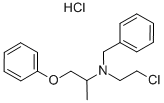
| 中文名称 | 盐酸酚苄明 |
| 英文名称 | Phenoxybenzamine hydrochloride |
| CAS号 | 63-92-3 |
| 分子式 | C18H22ClNO.ClH |
| 分子量 | 340.29 |
| EINECS号 | 200-569-7 |
| 熔点 | 137.5°C |
| 溶解度 | 溶于乙醇、DMSO、二甲基甲酰胺(DMF)等有机溶剂。 |
| 形态 | 粉末 |
| 酸度系数(pKa) | pKa 4.4 (Uncertain) |
| 颜色 | 白色 |
| 水溶解性 | <0.01 g/100 mL at 18.5 ºC |
| 默克索引编号 | 14,7256 |
| 稳定性 | 自购买之日起 2 年内保持稳定。 DMSO 或蒸馏水中的溶液可在 -20°C 下储存长达 3 个月。 |
| (IARC)致癌物分类 | 2B (Vol. 24, Sup 7) 1987 |
| 危险品标志 | Xn |
| 危险类别码 | 22-40 |
| 安全说明 | 22-36/37/39-45 |
| WGK Germany | 3 |
| RTECS号 | DP3750000 |
| 海关编码 | 2922299000 |
| Target | Value |
| α-adrenergic receptor |
The IC 50 (100 nM) derived from the blockade of [ 3 H]yohimbine binding by Phenoxybenzamine hydrochloride is significantly less than the IC 50 (550 nM) for the corresponding reversal by Phenoxybenzamine hydrochloride of the effects of norepinephrine on cyclic AMP accumulation. Phenoxybenzamine hydrochloride (50 nM) in conbination with Phenoxybenzamine hydrochloridetolamine (1000 nM) enhances Phenoxybenzamine hydrochlorideylephrine-induced contraction compared with pretreatment with Phenoxybenzamine hydrochloride (50 nM) alone in endothelium-intact aortae. Combined treatment with either dexmedetomidine (300 or 1000 nM) and Phenoxybenzamine hydrochloride (50 nM) or Phenoxybenzamine hydrochloridetolamine (1000 nM) and Phenoxybenzamine hydrochloride (50 nM) enhance Phenoxybenzamine hydrochlorideylephrine-induced contraction compared with Phenoxybenzamine hydrochloride alone (50 nM). In addition, combined treatment with Phenoxybenzamine hydrochloridetolamine and Phenoxybenzamine hydrochloride enhances Phenoxybenzamine hydrochlorideylephrine-induced contraction compared with dexmedetomidine (1000 nM) and Phenoxybenzamine hydrochloride combined treatment. Combined treatment with high concentrations of dexmedetomidine (1000 nM) and Phenoxybenzamine hydrochloride enhances Phenoxybenzamine hydrochlorideylephrine-induced contraction compared with combined treatment with low concentrations of dexmedetomidine (300 nM) and Phenoxybenzamine hydrochloride. Phenoxybenzamine hydrochloride (0.1-100 μM) inhibits glioma proliferation, migration, and invasion and suppresses the tumorigenesis capacity. Phenoxybenzamine hydrochloride also inhibits self-renewal of glioma stem-like cells. Phenoxybenzamine hydrochloride activates LINGO-1 and inhibits the TrkB-Akt pathway. Phenoxybenzamine hydrochloride (0.1 μM-1 mM) preserves primary neurons within the CA1, CA3 and dentate gyrus and produces a robust neuroprotective effect, and prevents neuronal death from OGD in all regions of the hippocampus when delivered at 2, 4, and 8 h post-OGD at 100 μM.
Phenoxybenzamine hydrochloride (20 nM, s.c.) effectively suppresses the tumorigenesis of glioma cells in mice and the cell density in Phenoxybenzamine hydrochloride-U87MG xenografts decreases significantly. Phenoxybenzamine hydrochloride (1 mg/kg, i.v.) treated rats shows significant improvements in NSS and foot fault scoring.
-
CAS号:99-76-3
4-羟基苯甲酸甲酯 , 用于合成 -
CAS号:83055-99-6
苄嘧磺隆 -
CAS号:738-70-5
甲氧苄氨嘧啶 -
CAS号:9032-42-2
甲基羟乙基纤维素 -
CAS号:119413-54-6
盐酸拓扑替康 -
CAS号:9004-67-5
甲基纤维素 , 粘度:12-18 cps (20 ℃时2%于水中) -
CAS号:100-51-6
苄醇 , 超干溶剂, water≤30 ppm, J&KSeal瓶 -
CAS号:100-46-9
苄胺 -
CAS号:98-84-0
1-苯乙胺 -
CAS号:91-00-9
二苯甲胺 -
CAS号:147-24-0
盐酸苯海拉明 -
CAS号:67-56-1
甲醇 -
CAS号:140-11-4
乙酸苄酯 -
CAS号:3287-99-8
苄胺盐酸盐 -
CAS号:593-81-7
三甲胺盐酸盐 -
CAS号:74223-64-6
甲磺隆 -
CAS号:99-76-3
4-羟基苯甲酸甲酯 , 用于合成 -
CAS号:83055-99-6
苄嘧磺隆 -
CAS号:738-70-5
甲氧苄氨嘧啶 -
CAS号:9032-42-2
甲基羟乙基纤维素 -
CAS号:119413-54-6
盐酸拓扑替康 -
CAS号:9004-67-5
甲基纤维素 , 粘度:12-18 cps (20 ℃时2%于水中) -
CAS号:100-51-6
苄醇 , 超干溶剂, water≤30 ppm, J&KSeal瓶 -
CAS号:100-46-9
苄胺 -
CAS号:98-84-0
1-苯乙胺 -
CAS号:91-00-9
二苯甲胺 -
CAS号:147-24-0
盐酸苯海拉明 -
CAS号:67-56-1
甲醇 -
CAS号:140-11-4
乙酸苄酯 -
CAS号:3287-99-8
苄胺盐酸盐 -
CAS号:593-81-7
三甲胺盐酸盐 -
CAS号:74223-64-6
甲磺隆