

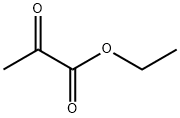
CAS号:617-35-6
|
英文名称:Ethylpyruvate
分子式
分子量
EINECS号
MDL
Smiles
InChIKey
丙酮酸乙酯化学百科
基本信息
| 中文名称 | 丙酮酸乙酯 |
| 英文名称 | Ethyl pyruvate |
| CAS号 | 617-35-6 |
| 分子式 | C5H8O3 |
| 分子量 | 116.12 |
| EINECS号 | 210-511-2 |
物化性质
| 熔点 | -58 °C |
| 沸点 | 144 °C (lit.) |
| 密度 | 1.045 g/mL at 25 °C (lit.) |
| 蒸气压 | 2.36hPa at 25℃ |
| FEMA | 2457 | ETHYL PYRUVATE |
| 折射率 | n20/D 1.404(lit.) |
| 闪点 | 114 °F |
| LogP | 0.435 at 22.5℃ |
| 溶解度 | 10g/l |
| 形态 | 液体 |
| 颜色 | 透明淡黄色 |
| 气味 (Odor) | 10.00% 的二丙二醇溶液。果香、酒香 |
| 水溶解性 | Miscible with water, ethanol and ether. |
| JECFA Number | 938 |
| 默克索引编号 | 14,8021 |
| BRN | 1071466 |
| 稳定性 | 易挥发的 |
安全信息
| 危险品标志 | Xi,F |
| 危险类别码 | 10 |
| 安全说明 | 16 |
| 危险品运输编号 | UN 3272 3/PG 3 |
| WGK Germany | 3 |
| Hazard Note | Flammable/Irritant |
| TSCA | Yes |
| 海关编码 | 29183000 |
| 危险等级 | 3 |
| 包装类别 | III |
| 毒性 | LD50 orally in Rabbit: > 2000 mg/kg LD50 dermal Rat > 2000 mg/kg |
生产及用途
丙酮酸乙酯(英文ethyl pyruvate),分子式为CH3COCOOC2H5,又称2一氧代丙酸乙酯,常温下为无色透明液体,具有新鲜、甜润的花果香气,可用于苹果、柑橘、巧克力等香精的调配之中。丙酮酸乙酯是一种极其重要的有机合成中间体,在医药(合成噻咪药物)、农药(杜邦公司生产的除草剂、噻咪类杀菌剂)、食品(可用作保鲜剂、防腐剂等)、化妆品等行业有广泛的用途。
丙酮酸乙酯对抑制表皮中酪氨酶的形成具有良好的功效,因此可以阻止表皮黑色素的形成,美白皮肤。还可以作为一种高效的活性成分添加到空气清新剂中,能有效清除空气中的氨及甲硫醇,而且气味清新自然。丙酮酸乙酯在构成杂环化合物方面性能优越,是农药合成中难以替代的原料和中间体,它被广泛应用于杀菌剂和除草剂的合成,由丙酮酸乙酯合成的噁唑酮衍生物也是一种很好的杀菌剂,在5.0×10⁻⁴的浓度下即可有效抑制、杀死真菌。
丙酮酸是生产色氨酸、苯丙氨酸、蛋白糖和维生素B的主要原料,是生物合成 L-多巴的原料(多巴用来治疗帕金森综合症)是乙烯聚合物的起始剂,亦是制备谷物保护剂的原料。从丙酮酸出发合成了一种高效的除草剂,该除草剂选择性优良,对莎草、狗尾草等杂草除去效果良好,而对农作物则很安全。 作为饲料和食品添加剂,具有很好的防腐保鲜功能,目前国内少量用于饲料和果酒的保存中。丙酮酸乙酯本身具有特殊的香味,可以应用于香精、香料中,同时也是合成树脂和塑料的重要原料。丙酮酸酯类产品还可作为特种溶剂用于电子材料方面,在这方面的应用国外需求增加较快。GRAS(FEMA)。FEMA(mg/kg):饮料50;冷饮20~150;糖果35;焙烤制品40。
适量为限(FDA,§172.515,2001)。
丙酮酸乙酯为黄色透明液体,b.p.144℃,n20D 1.4050,相对密度 1.060,微溶于水,与乙醇和乙醚相混溶,溶于多种有机溶剂。由乳酸乙酯用高锰酸钾氧化而得。
乳酸乙酯气相氧化
乳酸乙酯气相氧化是在催化剂存在下进行,其中MoO3作催化剂显示较其他金属氧化物的选择性要高,另外二元氧化物催化剂其中含有钼的氧化物如Fe2O3-MoO3和TeO2-MoO3对合成丙酮酸酯具有很高的选择性(温度300℃,选择性超过90%),如果用SnO2-MoO3为催化剂可以在较低的温度250℃下进行。SnO2-MoO3催化剂也可作为乳酸酯液相氧化的催化剂,反应温度130℃,反应时间3h,乳酸乙酯的转化率为38.4%,选择性为98.9%,生成丙酮酸乙酯。
乳酸乙酯液相氧化
乳酸乙酯在少量溴为催化剂的存在下液相氧化,用H2O2为氧化剂进行氧化,例如将50%H2O2滴加至搅拌并光照的含有乳酸乙酯、溴的二氯甲烷溶液中,反应温度25℃,H2O2滴加时间约1.5h,滴加完后再继续反应3h,该溶液用NaHCO3中和并用Na2SO3溶液洗涤,破坏和去除过氧化乳酸乙酯,然后浓缩减压蒸馏得丙酮酸乙酯。
丙烯酸酯氧化
丙烯酸酯在Cr或V化合物催化剂存在下以H2O2氧化生成丙酮酸酯,如丙烯酸异丙酯在三乙酰乙酸铬存在下,在乙腈溶剂中搅拌加入H2O2,反应温度50℃,8h得到丙酮酸异丙酯,选择性为99.1%,转化率87.9%。又如丙烯酸甲酯在三乙酰乙酸铬或铬酸存在下加入三乙胺反应20h,温度40℃,选择性72%,转化率82%,得到丙酮酸甲酯。
另外,丙酮醛和甲醇在磷酸镍催化剂存在下气相反应,可得到丙酮酸甲酯。
[2] 李康,葛欣,韩毓旺,等.钒催化剂选择性氧化乳酸乙酯制丙酮酸乙酯[J].无机化学学报,1999,(06):826-830.
[3] 陈宇,蔡德玲,张艳梅,等.硫酸亚铁催化乳酸乙酯合成丙酮酸乙酯[J].石河子大学学报(自然科学版),2005,(02):149-151.DOI:10.13880/j.cnki.65-1174/n.2005.02.006.
[4] 施宏,梁伟民,高艳琴.丙酮酸乙酯(EP)的抗炎作用及机制[J].复旦学报(医学版),2012,39(03):309-312.
[5] 熊伟,黄裕林,马红霞,等.TiO_2负载的纳米铑簇合物催化丙酮酸乙酯不对称氢化反应的研究[J].化学学报,2003,(06):922-925.
[6] 田小星,吴传新,孙航,等.丙酮酸乙酯抑制LPS诱导RAW264.7巨噬细胞HMGB1的表达[J].细胞与分子免疫学杂志,2011,27(12):1304-1307+1311.DOI:10.13423/j.cnki.cjcmi.006236.
[7] FINK M P. Ethyl pyruvate: a novel anti-inflammatory agent.[J]. Critical Care Medicine, 2003, 31 1 Suppl: S51-6. DOI:10.1097/00003246-200301001-00008.
[8] L. ULLOA. Ethyl pyruvate prevents lethality in mice with established lethal sepsis and systemic inflammation[J]. Proceedings of the National Academy of Sciences of the United States of America, 2002, 99 1: 12351-12356. DOI:10.1073/pnas.192222999.
丙酮酸乙酯对抑制表皮中酪氨酶的形成具有良好的功效,因此可以阻止表皮黑色素的形成,美白皮肤。还可以作为一种高效的活性成分添加到空气清新剂中,能有效清除空气中的氨及甲硫醇,而且气味清新自然。丙酮酸乙酯在构成杂环化合物方面性能优越,是农药合成中难以替代的原料和中间体,它被广泛应用于杀菌剂和除草剂的合成,由丙酮酸乙酯合成的噁唑酮衍生物也是一种很好的杀菌剂,在5.0×10⁻⁴的浓度下即可有效抑制、杀死真菌。
丙酮酸是生产色氨酸、苯丙氨酸、蛋白糖和维生素B的主要原料,是生物合成 L-多巴的原料(多巴用来治疗帕金森综合症)是乙烯聚合物的起始剂,亦是制备谷物保护剂的原料。从丙酮酸出发合成了一种高效的除草剂,该除草剂选择性优良,对莎草、狗尾草等杂草除去效果良好,而对农作物则很安全。 作为饲料和食品添加剂,具有很好的防腐保鲜功能,目前国内少量用于饲料和果酒的保存中。丙酮酸乙酯本身具有特殊的香味,可以应用于香精、香料中,同时也是合成树脂和塑料的重要原料。丙酮酸酯类产品还可作为特种溶剂用于电子材料方面,在这方面的应用国外需求增加较快。GRAS(FEMA)。FEMA(mg/kg):饮料50;冷饮20~150;糖果35;焙烤制品40。
适量为限(FDA,§172.515,2001)。
▼
▲
添加剂中文名称
允许使用该种添加剂的食品中文名称
添加剂功能
最大允许使用量(g/kg)
最大允许残留量(g/kg)
丙酮酸乙酯
食品
食品用香料
用于配制香精的各香料成分不得超过在GB 2760中的最大允许使用量和最大允许残留量
化学性质
丙酮酸甲酯为黄色透明液体,[CAS 600-22-6] b.p.134~137℃,n20D 1.4040,相对密度 1.130,溶于醇、酮等有机溶剂。丙酮酸乙酯为黄色透明液体,b.p.144℃,n20D 1.4050,相对密度 1.060,微溶于水,与乙醇和乙醚相混溶,溶于多种有机溶剂。由乳酸乙酯用高锰酸钾氧化而得。
用途
丙酮酸乙酯是杀菌剂噻菌灵的中间体。用途
可用于制造医药吲哚心安和农药噻菌灵等。同时是一种重要的医药和化工中间体,广泛应用于医药、农药、香精香料、食品添加剂、空气清新剂、精细化学品等行业。可用于合成心血管扩张剂等药物;也可用于美白和营养皮肤的化妆品,能够促进皮肤伤口愈合,预防和治疗以开裂、剥落和鳞化为特征的皮肤疾病;可用作空气清新剂中的高效活性成分,可以有效清除空气中的氨及甲硫醇;本身具有特殊的香味,因而可以应用于香精、香料中;也是合成树脂和塑料的重要原料。生产方法
丙酮酸乙酯是丙酮酸的一种简单而稳定衍生物,丙酮酸乙酯的制备方法有以下几种。乳酸乙酯气相氧化
乳酸乙酯气相氧化是在催化剂存在下进行,其中MoO3作催化剂显示较其他金属氧化物的选择性要高,另外二元氧化物催化剂其中含有钼的氧化物如Fe2O3-MoO3和TeO2-MoO3对合成丙酮酸酯具有很高的选择性(温度300℃,选择性超过90%),如果用SnO2-MoO3为催化剂可以在较低的温度250℃下进行。SnO2-MoO3催化剂也可作为乳酸酯液相氧化的催化剂,反应温度130℃,反应时间3h,乳酸乙酯的转化率为38.4%,选择性为98.9%,生成丙酮酸乙酯。
乳酸乙酯液相氧化
乳酸乙酯在少量溴为催化剂的存在下液相氧化,用H2O2为氧化剂进行氧化,例如将50%H2O2滴加至搅拌并光照的含有乳酸乙酯、溴的二氯甲烷溶液中,反应温度25℃,H2O2滴加时间约1.5h,滴加完后再继续反应3h,该溶液用NaHCO3中和并用Na2SO3溶液洗涤,破坏和去除过氧化乳酸乙酯,然后浓缩减压蒸馏得丙酮酸乙酯。
丙烯酸酯氧化
丙烯酸酯在Cr或V化合物催化剂存在下以H2O2氧化生成丙酮酸酯,如丙烯酸异丙酯在三乙酰乙酸铬存在下,在乙腈溶剂中搅拌加入H2O2,反应温度50℃,8h得到丙酮酸异丙酯,选择性为99.1%,转化率87.9%。又如丙烯酸甲酯在三乙酰乙酸铬或铬酸存在下加入三乙胺反应20h,温度40℃,选择性72%,转化率82%,得到丙酮酸甲酯。
另外,丙酮醛和甲醇在磷酸镍催化剂存在下气相反应,可得到丙酮酸甲酯。
参考资料
[1] 杨永泰,沈伟,徐华龙,等.乳酸乙酯催化氧化合成丙酮酸乙酯[J].复旦学报(自然科学版),1999,(06):701-704.DOI:10.15943/j.cnki.fdxb-jns.1999.06.022.[2] 李康,葛欣,韩毓旺,等.钒催化剂选择性氧化乳酸乙酯制丙酮酸乙酯[J].无机化学学报,1999,(06):826-830.
[3] 陈宇,蔡德玲,张艳梅,等.硫酸亚铁催化乳酸乙酯合成丙酮酸乙酯[J].石河子大学学报(自然科学版),2005,(02):149-151.DOI:10.13880/j.cnki.65-1174/n.2005.02.006.
[4] 施宏,梁伟民,高艳琴.丙酮酸乙酯(EP)的抗炎作用及机制[J].复旦学报(医学版),2012,39(03):309-312.
[5] 熊伟,黄裕林,马红霞,等.TiO_2负载的纳米铑簇合物催化丙酮酸乙酯不对称氢化反应的研究[J].化学学报,2003,(06):922-925.
[6] 田小星,吴传新,孙航,等.丙酮酸乙酯抑制LPS诱导RAW264.7巨噬细胞HMGB1的表达[J].细胞与分子免疫学杂志,2011,27(12):1304-1307+1311.DOI:10.13423/j.cnki.cjcmi.006236.
[7] FINK M P. Ethyl pyruvate: a novel anti-inflammatory agent.[J]. Critical Care Medicine, 2003, 31 1 Suppl: S51-6. DOI:10.1097/00003246-200301001-00008.
[8] L. ULLOA. Ethyl pyruvate prevents lethality in mice with established lethal sepsis and systemic inflammation[J]. Proceedings of the National Academy of Sciences of the United States of America, 2002, 99 1: 12351-12356. DOI:10.1073/pnas.192222999.
上下游产品
上游产品共计:10个
-
CAS号:10326-41-7
D-乳酸 -
CAS号:127-17-3
丙酮酸 -
CAS号:97-64-3
乳酸乙酯 -
CAS号:1214-39-7
6-苄氨基嘌呤 -
CAS号:75-09-2
二氯甲烷 -
CAS号:10326-41-7
D-乳酸 -
CAS号:127-17-3
丙酮酸 -
CAS号:97-64-3
乳酸乙酯 -
CAS号:1214-39-7
6-苄氨基嘌呤 -
CAS号:75-09-2
二氯甲烷
下游产品共计:34个
-
CAS号:7254-19-5
5-溴吲哚-2-羧酸 -
CAS号:194490-18-1
5-叔丁基-1H-吲哚-2-甲酸乙酯 -
CAS号:5192-03-0
5-氨基吲哚 -
CAS号:29906-67-0
1-甲基-5-硝基吲哚 -
CAS号:6146-52-7
5-硝基吲哚 -
CAS号:16732-57-3
5-硝基吲哚-2-甲酸乙酯 -
CAS号:53590-50-4
5-溴吲哚-2-甲醛 -
CAS号:4792-67-0
5-氯吲哚-2-羧酸乙酯 -
CAS号:10517-21-2
5-氯吲哚-2-甲酸 -
CAS号:127-17-3
丙酮酸 -
CAS号:3989-36-4
1,2,3-噻重氮-4-羧酸乙酯 -
CAS号:71086-99-2
5-氨基吲哚-2-甲酸乙酯 -
CAS号:64951-08-2
咪唑并[1,2-A!吡啶-2-羧酸 -
CAS号:2109805-66-3
5-氨基-1H-吲哚-2-羧酸乙酯 -
CAS号:14003-34-0
3-甲基喹喔啉-2-醇 -
CAS号:38922-77-9
咪唑并[1,2-|a|]吡啶-2-羧酸乙酯 -
CAS号:53590-48-0
2-羟甲基-5-溴-1H-吲哚 -
CAS号:7254-19-5
5-溴吲哚-2-羧酸 -
CAS号:194490-18-1
5-叔丁基-1H-吲哚-2-甲酸乙酯 -
CAS号:5192-03-0
5-氨基吲哚 -
CAS号:29906-67-0
1-甲基-5-硝基吲哚 -
CAS号:6146-52-7
5-硝基吲哚 -
CAS号:16732-57-3
5-硝基吲哚-2-甲酸乙酯 -
CAS号:53590-50-4
5-溴吲哚-2-甲醛 -
CAS号:4792-67-0
5-氯吲哚-2-羧酸乙酯 -
CAS号:10517-21-2
5-氯吲哚-2-甲酸 -
CAS号:127-17-3
丙酮酸 -
CAS号:3989-36-4
1,2,3-噻重氮-4-羧酸乙酯 -
CAS号:71086-99-2
5-氨基吲哚-2-甲酸乙酯 -
CAS号:64951-08-2
咪唑并[1,2-A!吡啶-2-羧酸 -
CAS号:2109805-66-3
5-氨基-1H-吲哚-2-羧酸乙酯 -
CAS号:14003-34-0
3-甲基喹喔啉-2-醇 -
CAS号:38922-77-9
咪唑并[1,2-|a|]吡啶-2-羧酸乙酯 -
CAS号:53590-48-0
2-羟甲基-5-溴-1H-吲哚
相关产品
-
CAS号:141-97-9
乙酰乙酸乙酯 -
CAS号:95266-40-3
抗倒酯(标准品) , 100 μg/mL in Methanol -
CAS号:64-17-5
乙醇 -
CAS号:9067-77-0
磷酸烯醇式丙酮酸羧化酶 -
CAS号:113-24-6
丙酮酸钠 -
CAS号:55965-97-4
丙酮酸肌酸盐 -
CAS号:120-47-8
尼泊金乙酯 -
CAS号:52009-14-0
丙酮酸钙 -
CAS号:127-17-3
丙酮酸 -
CAS号:9024-43-5
丙酮酸脱羧酶 -
CAS号:163520-33-0
双苯恶唑酸 -
CAS号:9014-20-4
丙酮酸脱氢酶 -
CAS号:141-78-6
乙酸乙酯 , 99.9% , 超干溶剂, 带分子筛, J&KSeal瓶 -
CAS号:142-77-8
油酸丁酯 -
CAS号:623-47-2
丙炔酸乙酯 -
CAS号:9001-59-6
丙酮酸激酶 -
CAS号:105-56-6
氰乙酸乙酯 -
CAS号:141-97-9
乙酰乙酸乙酯 -
CAS号:95266-40-3
抗倒酯(标准品) , 100 μg/mL in Methanol -
CAS号:64-17-5
乙醇 -
CAS号:9067-77-0
磷酸烯醇式丙酮酸羧化酶 -
CAS号:113-24-6
丙酮酸钠 -
CAS号:55965-97-4
丙酮酸肌酸盐 -
CAS号:120-47-8
尼泊金乙酯 -
CAS号:52009-14-0
丙酮酸钙 -
CAS号:127-17-3
丙酮酸 -
CAS号:9024-43-5
丙酮酸脱羧酶 -
CAS号:163520-33-0
双苯恶唑酸 -
CAS号:9014-20-4
丙酮酸脱氢酶 -
CAS号:141-78-6
乙酸乙酯 , 99.9% , 超干溶剂, 带分子筛, J&KSeal瓶 -
CAS号:142-77-8
油酸丁酯 -
CAS号:623-47-2
丙炔酸乙酯 -
CAS号:9001-59-6
丙酮酸激酶 -
CAS号:105-56-6
氰乙酸乙酯
产品供应商