

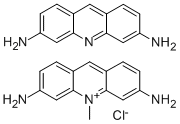
| 中文名称 | 吖啶黄 |
| 英文名称 | ACRIFLAVINE |
| CAS号 | 8048-52-0 |
| 分子式 | C27H25ClN6 |
| 分子量 | 468.98 |
| EINECS号 | 999-999-2 |
| 熔点 | 179-181 °C |
| 沸点 | 612.69°C (rough estimate) |
| 密度 | 1.0933 (rough estimate) |
| 折射率 | 1.6000 (estimate) |
| 溶解度 | 在水中的溶解度为0.33g/mL(lit.)(lit.) |
| 形态 | 粉末 |
| 颜色 | 深橙色至棕红色 |
| 默克索引编号 | 14,123 |
| 危险品标志 | Xn,N |
| 危险类别码 | 22-37/38-41-50/53-20/21/22-50-36/37/38 |
| 安全说明 | 26-39-60-61-36-37/39-29-36/37/39 |
| 危险品运输编号 | UN 3077 9/PG 3 |
| WGK Germany | 3 |
| RTECS号 | AR9660000 |
| 海关编码 | 38249064 |
Acriflavine is identified as a potent inhibitor of the MCT4 that can inhibit the binding between Basigin and MCT4. Acriflavine significantly inhibits growth and self-renewal potential of several glioblastoma neurosphere lines. The HIF-1 inhibitor acriflavine decreases survival and growth of CML cells. It targets stem cell potential of CML cells.
Acriflavine treatment inhibits intratumoral expression of VEGF and tumor vascularization. In a murine CML model, acriflavine decreases leukemia development and reduces LSC maintenance. Acriflavine retards tumor growth in a murine model of breast cancer. The combination of sunitinib with acriflavine significantly decreases vascular endothelial growth factor and TGF-β expression and reduces tumor vasculature followed by increased intratumor necrosis and apoptosis.
-
CAS号:65-61-2
吖啶橙盐酸盐 , =99% -
CAS号:8048-52-0
吖啶黄素 (3,6-二氨基-10-甲基吖啶盐酸盐和3,6-二氨基吖啶的混合物) , 70.0%(LC) -
CAS号:8063-24-9
盐酸吖啶黄 -
CAS号:135-49-9
吖啶黄G -
CAS号:952-23-8
原黄素盐酸盐 -
CAS号:1811-28-5
硫酸原黄素 -
CAS号:67774-74-7
吖啶黄 -
CAS号:17784-47-3
盐酸丫啶 -
CAS号:553-24-2
中性红 -
CAS号:14609-54-2
中-四(4-羧基苯基)卟吩 -
CAS号:553-30-0
原黄素 -
CAS号:74-87-3
氯甲烷 -
CAS号:65-61-2
吖啶橙盐酸盐 , =99% -
CAS号:8048-52-0
吖啶黄素 (3,6-二氨基-10-甲基吖啶盐酸盐和3,6-二氨基吖啶的混合物) , 70.0%(LC) -
CAS号:8063-24-9
盐酸吖啶黄 -
CAS号:135-49-9
吖啶黄G -
CAS号:952-23-8
原黄素盐酸盐 -
CAS号:1811-28-5
硫酸原黄素 -
CAS号:67774-74-7
吖啶黄 -
CAS号:17784-47-3
盐酸丫啶 -
CAS号:553-24-2
中性红 -
CAS号:14609-54-2
中-四(4-羧基苯基)卟吩 -
CAS号:553-30-0
原黄素 -
CAS号:74-87-3
氯甲烷