

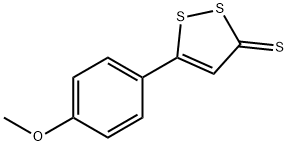
| 中文名称 | 茴三硫 |
| 英文名称 | Anethole trithione |
| CAS号 | 532-11-6 |
| 分子式 | C10H8OS3 |
| 分子量 | 240.36 |
| EINECS号 | 208-528-5 |
| InChI | InChI=1S/C10H8OS3/c1-11-8-4-2-7(3-5-8)9-6-10(12)14-13-9/h2-6H,1H3 |
| SMILES | S1C(C2=CC=C(OC)C=C2)=CC(=S)S1 |
| 熔点 | 111° |
| 沸点 | 353.09°C (rough estimate) |
| 密度 | 1.4406 (rough estimate) |
| 折射率 | 1.5080 (estimate) |
| 溶解度 | 溶于氯仿 |
| 形态 | 粉末晶体 |
| 颜色 | 橙色 |
| 气味 (Odor) | 很苦的气味 |
| 海关编码 | 2934.99.3000 |
| 毒性 | LD50 orl-mus: 3850 mg/kg NIIRDN 6,25,82 |
茴三硫又称胆维他、茴香脑三硫酮,属于分泌性利胆药,能明显增强肝脏谷胱甘肽水平,显著增强谷氨酰半胱氨酸合成酶、谷胱甘肽还原酶和谷胱甘肽硫转移酶活性,降低谷胱甘肽过氧化酶活性,增强肝细胞活力,使胆汁分泌增多。不增加肝脏负担,可降低肝脏门脉压力,消除肝炎病灶的肝充血等症状,促进肝细胞活化,有助于肝功能的改善和恢复。能保护肝脏免受肝毒性物质的损害。能显著增加毒蕈碱样乙酰胆碱受体数,促进唾液分泌。具有胃肠道M受体和β2受体调节作用,促进胃肠蠕动和肠管内气体排出。适用于治疗胆囊炎、胆管炎、胆石症以及高胆固醇血症; 可用于急、慢性肝炎,初期肝硬化的治疗;或用于消除腹胀、便秘、口臭、恶心、闷痛等消化不适。
以上信息由Chemicalbook彤彤编辑整理。Anethole trithione,一种硫杂环胆碱,是一种胆汁分泌刺激剂。Anethole trithione 可增强唾液分泌并增加 mAChR 受体,可用于口干症的研究。
Anethole trithione, a slow-releasing H 2 S donor, is a bile secretion-stimulating drug or cholagogue that protects the liver via an increase in glutathione levels and phase II detoxifying enzymes. Anethole trithione is a potentially efficacious chemoprevention agent for lung cancer and exerts chemopreventive effects in several target organs, such as the liver and colon, by increasing the detoxification rate of carcinogens in these target organs. Anethole trithione protects blood-brain barrier integrity following cerebral ischemia.
Chronic treatment with Anethole trithione increases the salivary secretion from the rat submaxillary gland induced by electrical stimulation of the parasympathetic nerve and by injection of pilocarpine. In parallel with the enhancement of the salivary secretion, the number of the muscarinic acetylcholine receptors is significantly increased.
-
CAS号:532-11-6
茴三硫 -
CAS号:104-46-1
茴香脑 -
CAS号:699-10-5
甲基苯甲基二硫醚 -
CAS号:138-86-3
(+/-)-柠檬烯 , 95.0%(GC) -
CAS号:4180-23-8
茴香烯 -
CAS号:59-26-7
尼可刹米 -
CAS号:77-73-6
二聚环戊二烯 -
CAS号:122-84-9
对甲氧基苯基丙酮 -
CAS号:8008-63-7
猪胆盐 -
CAS号:504-60-9
间戊二烯 -
CAS号:142-29-0
环戊烯 -
CAS号:26472-00-4
甲基环戊二烯,二聚物 -
CAS号:591-95-7
1,2-戊二烯 -
CAS号:542-92-7
茂 -
CAS号:532-11-6
茴三硫 -
CAS号:104-46-1
茴香脑 -
CAS号:699-10-5
甲基苯甲基二硫醚 -
CAS号:138-86-3
(+/-)-柠檬烯 , 95.0%(GC) -
CAS号:4180-23-8
茴香烯 -
CAS号:59-26-7
尼可刹米 -
CAS号:77-73-6
二聚环戊二烯 -
CAS号:122-84-9
对甲氧基苯基丙酮 -
CAS号:8008-63-7
猪胆盐 -
CAS号:504-60-9
间戊二烯 -
CAS号:142-29-0
环戊烯 -
CAS号:26472-00-4
甲基环戊二烯,二聚物 -
CAS号:591-95-7
1,2-戊二烯 -
CAS号:542-92-7
茂